
Paul doesn't guess what a garden needs. He diagnoses it - a discipline built over twenty years restoring some of Australia's toughest land.

Paul built his approach to sustainable land management whilst working in the W.A. Wheatbelt, where he spent years as a Landcare Coordinator. Working alongside dryland farmers on paddock-scale soil trials, he learnt an exacting, evidence-based work of correcting soil health across some of the toughest growing country in the state.
From there, he moved into the Rangelands, coordinating land restoration programs across pastoral stations, Traditional Owner land and conservation reserve - arid country where he learned, firsthand, that water only delivers results if the soil profile beneath it is prepared to hold it.
In between, he spent time in South Sudan designing water and livestock infrastructure for post-conflict communities, work that demanded rigorous systems and strategy over guesswork.
Twenty years developing sustainable land systems across three continents - and the discipline never changed : get the fundamentals right, or nothing survives the season.
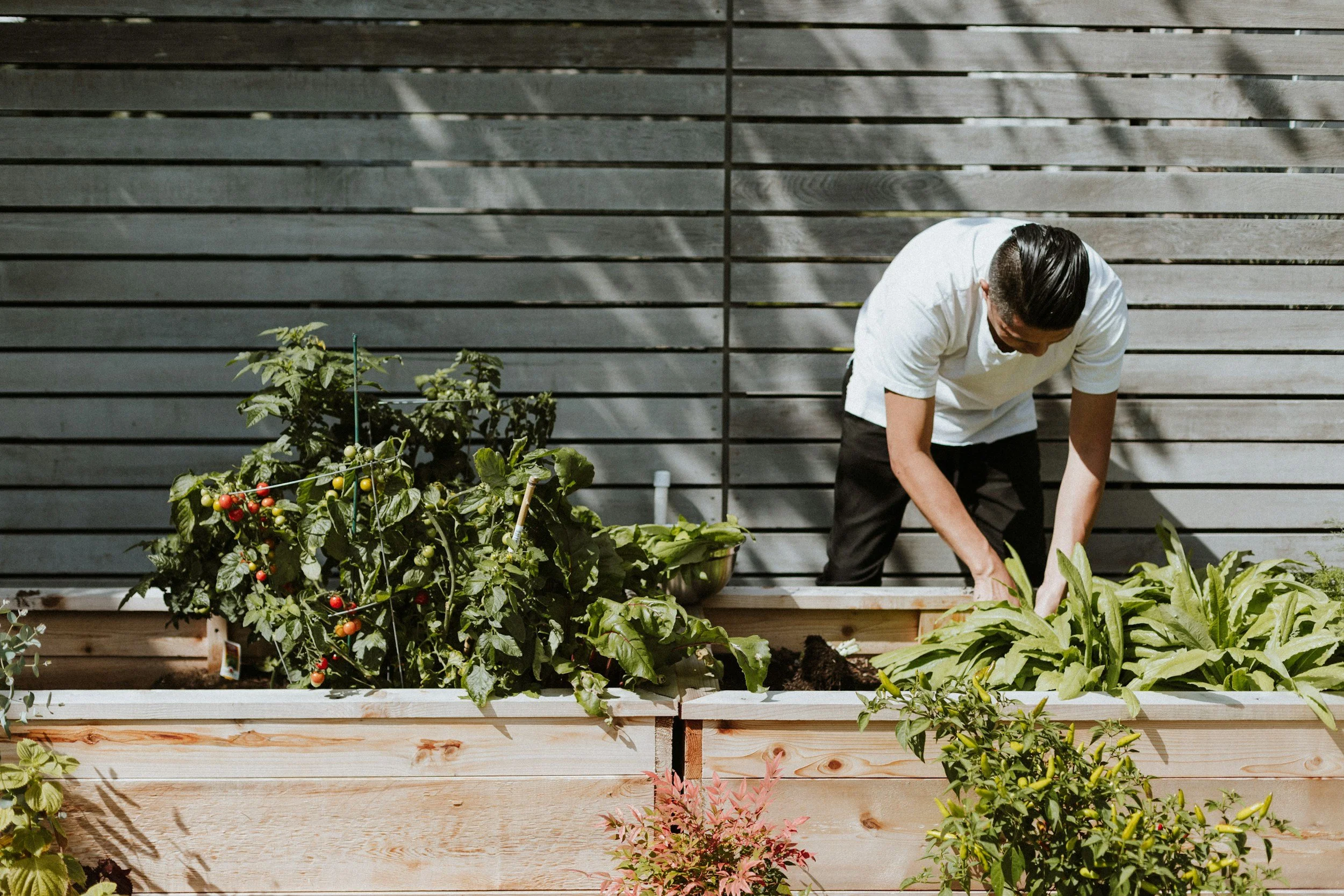
The lawn always looks fine. The garden never quite thrives.
That gap - between a garden that's maintained and one that's actually alive - is why Leo Earth Gardens exists.
Most Perth garden problems start beneath the surface. Much of Bayswater sits on Bassendean sand - the oldest, least fertile of Perth's sand systems: pale, low in organic matter, and barely able to hold onto phosphorus or potassium. Water runs straight through instead of being held, and nutrients leach out before roots can use them. Extra watering and fertiliser can mask that for a season. They can't fix it.
Closer to the Swan River - around the Maylands Peninsula and East Perth - it's a different story. Alluvial soil and pockets of heavier clay mean the ground struggles to drain at all, and shifts as it wets and dries. Here, we work on drainage and structure rather than water retention.
Either way, we build from the ground up - soil restoration through tailored nutrition and water-wise care that improves what the soil can hold, not just what gets poured onto it. So gardens hold through a long Perth summer and come back strong the winter after.
We work chemical-free by default, treatment kept as a genuine last resort. One-off reset or ongoing care, we'll always help you understand your own soil and watering - so your garden keeps thriving, on your terms.
Questions We Get Asked
-
Most Perth lawns fail because the soil under them is depleted, not because of bad luck. Sandy soil drains fast and loses nutrients before the roots can use them. A lawn can look fine through winter then collapse in summer heat once the soil can't hold water anymore.
Adding more water or fertiliser on top of poor soil rarely fixes this.
Leo Earth Gardens starts every lawn job with a soil check, because treating the lawn without fixing the soil means the same problem comes back next summer.
-
Sandy soil in Perth needs three things: organic matter, a wetting agent, and ongoing nutrition.
Sand can't hold water or nutrients near plant roots on its own, so water runs straight through it even with regular watering.
Adding compost improves structure, a wetting agent stops water repelling off the surface, and a nutrition program feeds the soil over time.
Leo Earth Gardens runs this as three stages - Reset, then Restore, then Maintain - so the soil keeps improving each season instead of needing the same fix every year.
-
Kangaroo paw, grevillea, correa and local banksias are common choices for low-water Perth gardens.
But plant choice only works if the soil can hold moisture. A native plant in poor, dry sand still struggles.
Leo Earth Gardens fixes the soil first, so a low-water native garden actually reduces watering and maintenance instead of turning into another underperforming garden bed.
-
A wetting agent breaks down water repellency in dry sandy soil, so water soaks in instead of running off the surface.
Water repellency is common in Perth soil, especially after a dry summer, and can make a lawn look under-watered even when it's watered regularly.
If water pools or beads on the surface, or disappears too fast, you probably need one.
Leo Earth Gardens can apply it as part of ongoing maintenance, or a garden and soil restoration program, timed before winter rain and spring dry spells.
-
Costs vary a lot because most gardeners charge by the hour, which makes it hard to know what you're paying for upfront.
Leo Earth Gardens uses fixed quotes based on garden and lawn area, hedge length and green waste volume.
Many jobs start with a one-off Garden Reset, then move to a monthly Maintain plan at a lower rate.
To get a quote, text or email your address with a few photos of the areas you want looked at.
-
As a guide, every 6–8 weeks through spring and autumn, less often over summer and winter when growth slows.
Sandy soil loses nutrients fast, so the right amount depends on the soil's condition at the time, not just the calendar.
Leo Earth Gardens fertilises as part of an ongoing program based on regular checks, rather than a fixed schedule.
-
Yes, if it's built around soil health. Mowing, pruning and feeding the soil handle most weed, pest and disease pressure on their own, because a healthy lawn resists them better in the first place.
Leo Earth Gardens removes weeds by hand or with a thermal burn torch, and uses mineral and organic treatments where needed.
The only exception is a declared or dangerous weed infestation, treated once at the reset stage. It takes longer than spraying, but it deals with the cause instead of the symptom.
-
Yes, this is part of what we can do.
The City of Bayswater runs a Waterwise Native Verge Program, co-funded with Water Corporation, offering rebates of up to $250 for verges under 80m² and up to $500 for verges over 80m².
City of Vincent and City of Stirling run their own similar programs, though the details and funding change year to year, so check directly with your council for what's currently on offer.
Verge gardens still need to follow council rules - natural lawn or native planting is fine, artificial turf isn't, and there are limits on hardstand and garden bed height.
We can plan and install a verge garden that meets these guidelines now, ready to apply for a rebate once a round is open.
We use species suited to Perth's sandy soil and dry summers, and the same soil-first approach we use across all our work applies here - preparing the soil properly means the garden needs less water and less upkeep from the start.
Once it's planted, we can maintain it too, so it stays low-water and low-fuss long after the install. The same approach works just as well through the rest of the garden, not just the verge.